Protocols
No Added Hormones
We do not use added hormones or growth stimulants on any of our cattle. We are not in the business of pushing our animals to be finished quickly, which is a major reason why hormone supplementation is used. Our critters are free to grow at their natural rate until they are ready. Slow and steady, free-choice access to quality feed and barley is a huge part of the well-marbled beef we create here!
Natural and Low-Stress
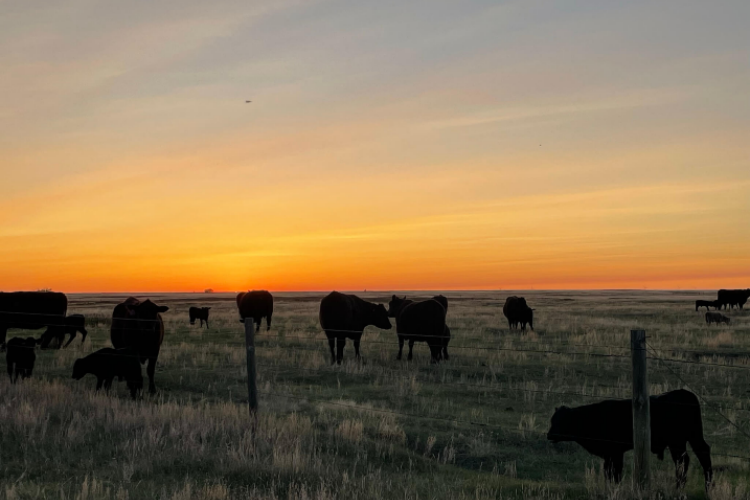
Our cattle are raised naturally in a herd environment. They are able to roam large pastures from birth to finish, never leaving our farm.
We care about the way our beef are treated during their time with us, and you should too! If you want to be sure that the beef you are buying was raised as naturally as possible and had a completely natural, happy bovine existence, you have come to the right place!!
Low-stress handling is of utmost importance to us. We have implemented specialized handling systems with curved alleys as well as a commitment to low-stress stockmanship. If you are interested in learning more about this watch the Temple Grandin Documentary.... highly recommended!
Cattle that are not stressed provide a better product. More importantly, it is the most humane, ethical and cost-effective way of raising beef!
Free from Antibiotics
We can guarantee that our beef is antibiotic free. While we do use life saving antibiotic treatment occasionally if an animal has an infection, those specific animals are removed from our beef production line. We know how important it is for customers to know without a doubt that their beef is absolutely pure! Typically our beef animals do not get illnesses as they are raised in natural, low stress environments with plenty of room to roam. We are proud to report that we have not needed to treat even one beef animal since we started selling beef locally in 2020!
It is important to note, however, that all beef produced in Canada is antibiotic free; even if the animal did receive medication at some point. Beef producers must comply with strict regulations that demand any treated animals not be sent for slaughter until the medicine has completely cleared their system. Processing facilities have CFIA inspectors on duty that check each and every animal for signs of recent antibiotic treatment. So no matter where you get your beef from - please be assured that it is antibiotic free!
Grass Fed, Barley Finished
While our cattle graze naturally on pasture and grass forages for their whole life, in their last few months we supplement their diet with homegrown barley. Outstanding Beef has a substantial cropping operation - we plant around 2600 acres every year to crops such as barley, wheat, oats and peas.
In the finishing stages we start adding our barley into the beef ration. We believe that barley supplementation is the cornerstone of our beef's characteristic well-marbled appearance, melt-in-your-mouth texture, and deep-bodied caramelized flavour.
Alberta Beef is famous all over the world, and part of that fame is the from way it is finished, on barley. Barley is a crop well suited to Alberta's short growing season and cooler climate. In other provinces and countries, beef are often finished on corn, distillers grains and other feed products, which (in our opinion) do not yield the same high quality product that barley does.

Dry-Aged
Supporting Outstanding Beef means you are also supporting many other smaller family businesses, such as our butcher shop! All your beef is carefully hand cut and packed after being traditionally dry-aged for 14-21 days. Dry aging involves hanging the beef carcass in perfectly temperature controlled meat cooler for approximately 2 weeks. This gives the enzymes in the beef time to break down and tenderize, contributing to the tenderness and flavour of farm fresh beef.
Dry-aging is an important part of the process that contributes to the tenderness and flavour of locally sourced beef. Most grocery store meat has not been dry-aged, rather it is "wet-aged". The meat is packaged in primals directly after harvest until it is ready to be processed into retail cuts. Dry aging is not utilized in larger packing plants that provide beef to the masses as there is just not time for the process. It is unfortunate, because dry-aging is a traditional process that helps to create a quality product and eating experience.